
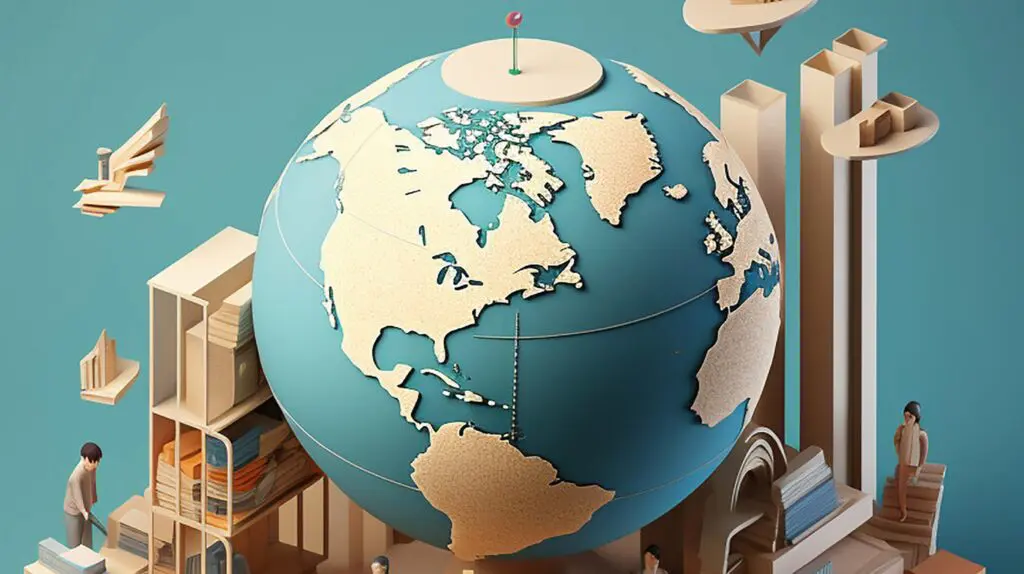
Internationalization, the drive of a company to seek new markets to serve, adapting to the standards, requirements, and specificities of new territories, has always been part of Metal’s DNA. From the early years, we have looked beyond national borders, focusing first on Europe, then the United States, and even reaching New Zealand. Thanks to this continuous drive to "go further" and careful planning, today we supply major European and Italian companies as well as international groups operating in very diverse sectors.
Internationalization requires planning and flexibility
Internationalization is a process that must be carefully planned: approaching it without thoroughly researching the target market and assessing one’s own resources can be risky. A detailed preliminary analysis of the context and its potential is essential to build a truly credible and appealing offer for the companies operating there. It is a process that follows several distinct phases.
1 – Initial analysis of the market and internal resources
The first step is to determine whether the company is ready to enter the new market. Therefore, the analysis starts internally, focusing on the company’s know-how, technologies, and processes. At the same time, the target market is studied to understand the opportunities, challenges, industry standards, regulatory, fiscal, environmental, and technological requirements. If the market lies outside the European Union, it also means examining customs regulations in detail. Once the context is clear, the potential of the company’s offering in the new market is evaluated. One of the most valuable activities from this perspective is participating in industry trade fairs. For example, at Metal’s, we are present - both directly and as visitors - at all major trade events in Italy and abroad.
2 – Planning and starting negotiations
Once it has been established that the market is attractive and sufficiently profitable, the next step is planning. This includes evaluating whether to open a facility in the territory, rely on a local partner, or export directly to the client’s plant.
3 – Production for the client and target market
Adapting products and services to the market and to the client’s requirements is certainly the most complex and important phase of the internationalization process. It is precisely when entering the heart of design and production that a company’s real ability to meet the demands of the new market is tested, even when this means modifying a “standard” product. At Metal’s, for example, this was the case when a company operating in the Food & Beverage sector entrusted us with manufacturing vending machines tailored for the Middle Eastern market. We supported the client in developing a new project by quickly modifying a product they already produced for them — including a very large display, refrigerator, and boiler — so that it could be used even in hotter countries, reducing production costs without compromising quality or aesthetics.
4 – Continuous improvement
For a company, internationalization also means adapting to requirements that change over time and can become increasingly challenging: foremost among these are compliance with very high quality and technological standards, as well as environmental sustainability. The latter, also driven by the demands of our clients in Europe, has become one of Metal’s core pillars.
Environmental sustainability and certified quality
Environmental sustainability represents a further competitive advantage for a company aiming to export to Europe and globally, especially in international markets where environmental commitment is a prerequisite for establishing solid and lasting partnerships. Fully embracing this principle requires investing in new technologies, modifying habits, processes, and choices. Essentially, it means evolving as a company. At Metal’s, this was exactly the case: we adopted a Green Mission that gradually led us to install photovoltaic panels and choose hybrid systems, then invest in a nitrogen generator and implement a certified environmental management system, and finally measure our Carbon Footprint to develop a sustainability plan. At the same time, we have continuously invested in quality and certification of processes, manufacturing, and skills.
Thanks to this approach to internationalization and continuous change, Metal’s continues to collaborate with multinational corporations and large industrial groups. Our experience has allowed us to specialize to meet the specific needs of individual territories, sectors, and clients.
Metal’s: from a local company to a global partner of major national and international groups
Founded as a local company, over the years Metal’s has transformed into a global partner. Market and customer demands, experience in internationalization, and vertical integration in various strategic sectors have contributed to changing our company as well: evolving from a supplier of semi-finished products, components, complex assemblies, and machine parts into a service partner as well as a production partner. This is because we can manage our clients’ entire logistics process, overseeing every phase of the supply chain - from design support to delivery FOB at the company’s plant worldwide. Today, Metal’s already serves major groups in Germany, Austria, Switzerland, the Netherlands, Italy, the United Kingdom, and New Zealand, and we are exploring opportunities in new European and non-European markets such as Finland, Sweden, Norway, Denmark, France, Spain, and, most recently, the United States. These companies operate in very diverse sectors but share strict standards and advanced technological processes, including:
- Medical/Pharmaceutical
- Meat processing and food handling
- Bottling and packaging
- Baking, ovens, and accessories
- Professional coffee machines
- Professional kitchens
- Standard and industrial professional dishwashers
- Ice cream productio
- Refrigeration
- Electrical panels
- Access control systems
Vertical integration in these sectors allows us to promptly respond to our customers’ requests, such as optimizing production without compromising quality. This know-how also enables us to identify improvements in the production of an already established or in-development assembly and propose them to our clients. These may include more efficient automated processes, such as robotic laser welding, or solutions to reduce production costs to help our clients adapt their products to new market demands.
Want to get in touch with us?
At Metal’s, we carefully select the clients we work with - medium to large-sized companies - and support them throughout every stage of the logistics flow: from concept to the creation of stainless steel assemblies, semi-finished products, and machine parts. Would you like to learn more?